



Why Do Cats Vomit Hairballs and How to Prevent?

Early in the morning, you open the door and spot a little ball of fur in the corner. Your cat is calmly licking its paw, as if nothing happened. Most owners would smile and say, “Ah, another hairball.”
It may look ordinary, but this small moment is actually part of your cat’s natural instinct. Vomiting a hairball is usually not a sign of illness. It’s simply how a cat’s body clears out swallowed fur. As cat parents, we don’t need to panic. But we do need to understand what’s normal and when something might be wrong. Let’s take a closer, calmer look at what that little ball of fur really means.
Cats vomit hairballs because grooming is part of their natural instinct. They spend hours every day licking their fur. This helps clean their coat and control body temperature. At the same time, they swallow a lot of loose hair. Most of this hair passes out in the stool. However, some hair stays in the stomach and slowly forms a ball. When the hairball becomes too large to pass into the intestines, it irritates the stomach and triggers vomiting. The cat then throws it up. This is a natural self-protection process of the digestive system. It is not a disease.
It really comes down to how often it happens and how your cat feels afterward. A healthy adult cat might throw up a hairball once in a while, especially during shedding season — maybe once or twice a month. If your cat goes right back to playing, eating, and using the litter box like usual, there’s usually no reason to worry.
Long-haired cats tend to have hairballs more often simply because they shed more. As long as their energy level stays the same and their weight doesn’t drop, it’s generally okay.
Kittens don’t get hairballs as often since they don’t groom as much yet. Senior cats, on the other hand, deserve a bit more attention. The most important thing is knowing what’s normal for your own cat. When you’re familiar with their daily habits, it’s much easier to notice when something feels off.
If hairball vomiting becomes frequent, such as several times a week, or if the cat keeps trying to vomit but nothing comes out, you should pay attention. Other warning signs include loss of appetite, low energy, constipation, diarrhoea, bloating, or abdominal pain. A hairball stuck in the intestines can be dangerous. Frequent vomiting may also be a sign of pancreatitis, kidney disease, or swallowing a foreign object. If there is blood in the vomit, or it looks like coffee grounds, or if the cat refuses food for several days, you must see a veterinarian immediately. Do not assume it is “just a hairball.”
If you want to make hairballs less of a problem, a few simple habits can really help:
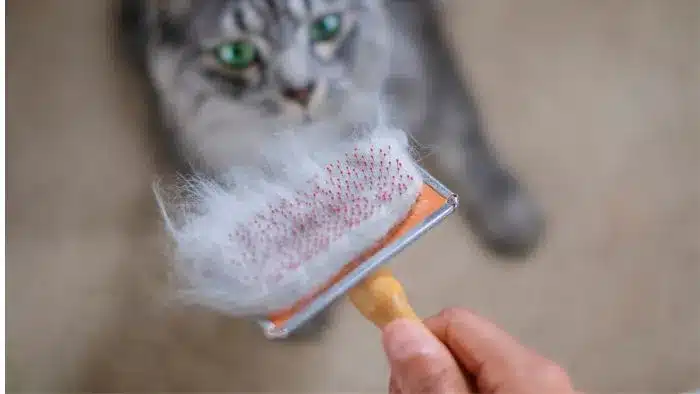
Brushing your cat every day makes a big difference. The less loose fur they swallow, the fewer hairballs they’ll have. During shedding season, a gentle daily brush is especially useful. Some cats also benefit from a little cat grass, like wheat grass, which helps move swallowed hair through the system. Hairball paste or high-fibre food can help too, but there’s no need to overdo it.
Make sure your cat drinks enough water, and keep them mentally busy with toys and playtime. Sometimes stress can lead to over-grooming, which can result in more hair being swallowed. Every cat is different, so adjust your care to their personality. If your cat hates brushing, go slowly and turn it into a positive experience with small treats and patience.
Hairballs themselves are simply part of being a cat. If it only happens occasionally and your cat seems perfectly fine afterwards, it’s usually just a normal body process. The key is balance — don’t ignore warning signs, but don’t panic over something common either.
At the end of the day, brushing away loose fur isn’t just about preventing hairballs. It’s also a quiet moment of care between you and your cat. And even cleaning up that little mess on the floor? That’s just one of the many small, ordinary ways we show love