



Why Cats Love Boxes So Much?

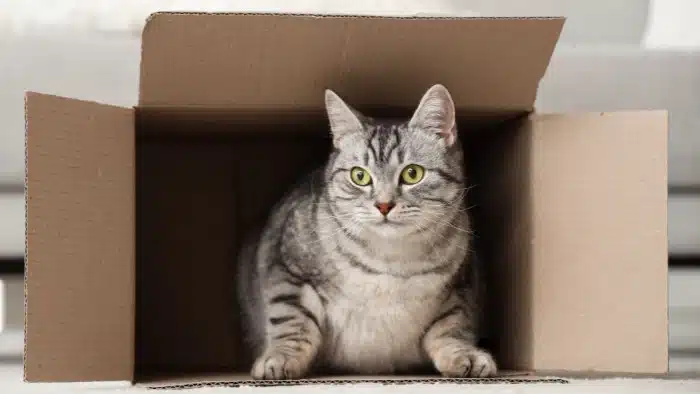
If you have a cat, you’ve probably seen it crawl into cardboard boxes or even “fake boxes” drawn on the floor. You might wonder: why are cats so fascinated by boxes? Actually, it’s more than just a strange habit. It comes from their natural instincts and survival needs. From wild ancestors to modern house cats, the love for enclosed spaces has stayed the same. Understanding why cats go into boxes can help us meet their psychological needs and strengthen the bond between humans and cats.
Cats’ interest in boxes comes first from their dual role as hunters and prey. In the wild, cats hunt but can also be hunted by bigger predators. So they naturally look for hidden, safe places to watch their surroundings, hunt, or avoid danger. A cardboard box provides a small, enclosed space with one or two exits. It hides them from view and gives a “back-to-wall” sense of security. In this environment, cats can relax and rest. Even though house cats no longer face wild dangers, their built-in need for safety remains strong.
Homes may feel cozy for people, but for sensitive cats, even doorbells, visitors, vacuum noise, or their owner’s changing mood can be stressful. When they get nervous, cats usually look for a safe spot to hide from everything. A cardboard box works perfectly—it blocks sound, limits what they can see, and gives them a little space they can fully control. Studies show that cats with hiding places adapt to new environments more quickly and experience less stress. Therefore, a simple cardboard box can become an important tool for cats to regulate their emotions.
In addition, boxes suit cats’ temperature needs. Cats feel comfortable at higher temperatures than humans, around 30°C. Cardboard keeps warmth well, so curling up in a box feels cozy, especially in air-conditioned rooms or winter. This is why some cats keep choosing the same box and may ignore a fancy cat bed—the simple box better meets their comfort needs. This sensitivity to microenvironments shows cats’ strong adaptability.
Finally, boxes satisfy cats’ curiosity and play instincts. Anything new can become a “territory” or “toy.” The rustling sound, scratchable texture, and space to jump and hide all spark their hunting and playful instincts. Crawling in and out, pouncing on edges, hiding to ambush toys—these activities are fun and help exercise their body coordination. Even without food rewards, cats enjoy it endlessly. This self-driven play is important for their physical and mental health.
In short, cats’ love for boxes is more than just cute or funny. It combines their need for safety, stress relief, warmth, and play. As owners, instead of stopping them from going into “messy” boxes, we can provide a few clean, well-sized boxes or even turn them into fun hiding spots. This respects cats’ nature and builds a harmonious relationship. Next time you see your cat sleeping in a delivery box, remember: it’s not just a simple box—it’s their safest little fortress.