



Why Does My cat bite Me After I pet him for a Few minutes?

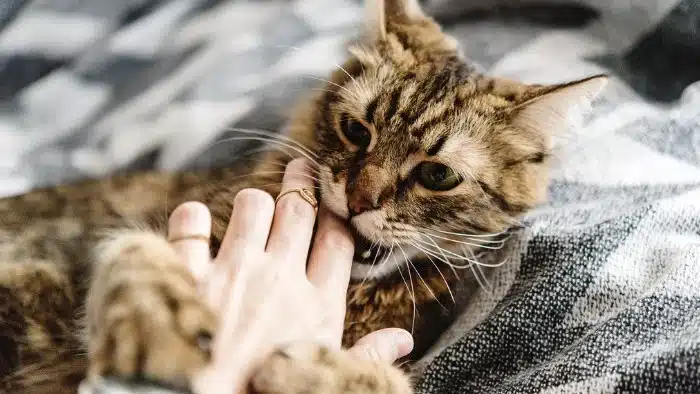
Many cat owners have had this moment: your cat was purring and enjoying your touch, and suddenly it turns its head and bites you. You were trying to be close, but a sudden bite broke the warm moment. It may feel like the cat changed its attitude, but in fact, this behaviour is a clear signal — your cat’s body or emotions have reached their limit. To avoid this, the key is to understand your cat’s tolerance and the reason behind this sudden change.
1. Physical tolerance runs out
Cats have very sensitive skin. Areas like the belly, the base of the tail, and the armpits are sensitive zones. Some cats allow you to touch them, but prolonged or repeated touching can make them gradually uncomfortable. Just like people get annoyed if someone scratches them for too long, cats also have a limit. After 5–10 minutes of petting, or when you touch a sensitive area, their nerves become tense. To stop the discomfort, they bite as a quick way to signal ‘stop’. This is not real aggression — it is self-protection. Your cat is simply saying, “I don’t feel good anymore.”
2. Emotional changes: excitement or anxiety
Sudden biting often comes from emotional shifts. Petting makes cats feel good, but if they get too excited, their hunting instinct may be triggered. For cats, the feeling of being touched can be similar to the sense of “prey movement.” When their excitement reaches the peak, they may use teeth and claws as part of this instinctive reaction.
If a cat is already stressed — loud environment, physical discomfort, or past bad experiences with forced petting — the constant touch can build up anxiety. When the tension becomes too much, the bite is a way to release stress.
3. Sometimes it is a health warning
In some cases, a sudden bite is a sign that something is physically wrong. If a cat becomes more sensitive than usual, reacts strongly to touch in areas it used to enjoy, shows signs of tiredness or reduced appetite, or keeps licking one spot, it may be in pain. Problems like mouth inflammation, skin irritation, or joint discomfort can make petting feel worse. Since cats cannot explain their pain, they bite to avoid touch.
How to avoid being bitten
Cats bite during petting because they reach their limit, feel emotional stress, want to protect their boundaries, or are in pain. It is not random or mean. To avoid bites, learn to read your cat’s signals: watch for tail flicking, ears pressing down, or wide pupils — these are early signs of impatience. Stop petting before your cat reaches its limit. Keep petting sessions short, avoid sensitive spots, and never force your cat to stay.
Cats want comfortable companionship, not forced affection. When you respect their boundaries and feelings, petting becomes a pleasant experience for both you and your cat.